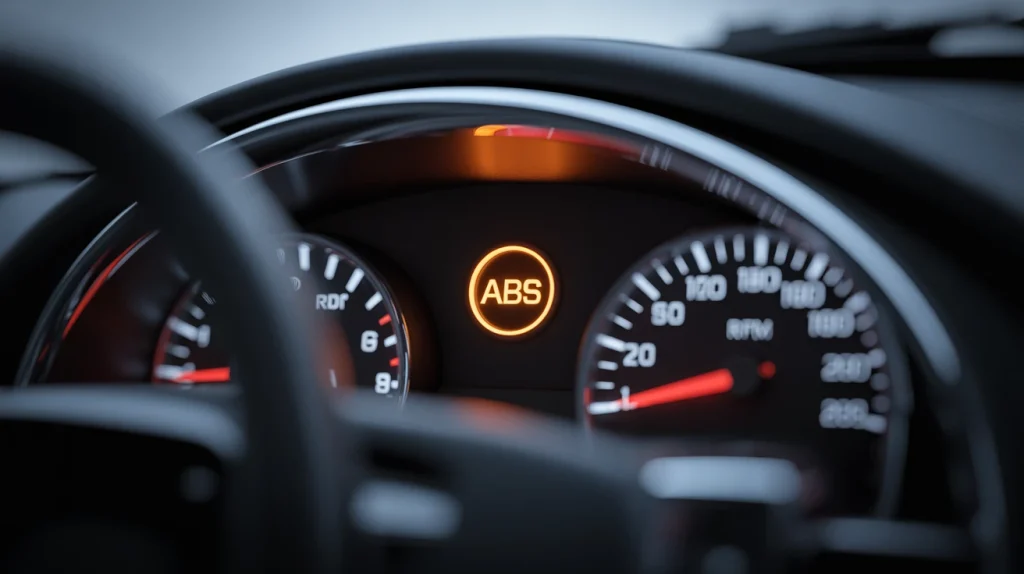
When the ABS Warning Light flashes on your dashboard, your heart might skip a beat. I’ve been there too — cruising on a highway, music on low, thinking about nothing mechanical at all… then boom, that orange light appears like an uninvited guest.
Let’s break it down in plain terms, explore why it happens, how risky it is, and what you can do before it turns into an expensive headache.
Content
What Is ABS and Why It Matters
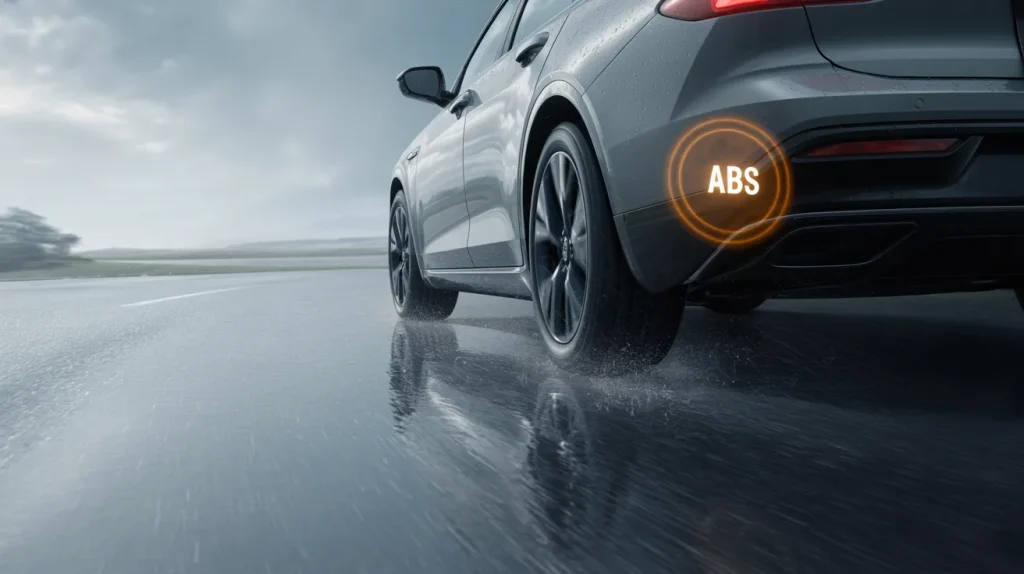
ABS stands for Anti-Lock Braking System. Think of it as your car’s brake-assistant that stops your wheels from locking up when you hit the brakes hard — especially on wet or slippery roads.
Without ABS, braking suddenly could make your car skid like a shopping cart on ice. With ABS working properly, your car keeps grip and direction, helping you steer while braking. It’s not just a “feature” — it’s a major brake safety system alert mechanism.
How the ABS System Works (In Simple Words)
Your ABS system is a small network of smart components that talk to each other every time you brake:
Core parts include:
Wheel speed sensors – monitor how fast each wheel spins
ABS pump – controls brake pressure
Brake control module – the brain that processes data
ABS and traction control system – often linked for stability
If any part sends the wrong signal — like a wheel speed sensor error — the system triggers the warning light.
When ABS Works Best
ABS is most effective during:
Sudden braking on highways
Rainy or snowy conditions
Loose gravel or muddy roads
Sharp turns where steering control matters
If the ABS Warning Light comes on, it means the system is temporarily stepping back and letting you brake manually without wheel-control support.
Benefits of ABS (That We Often Ignore)
Here are the real advantages I’ve personally experienced over the years:
No wheel lock-up under panic braking
Better steering control while braking
Lower accident risk on slippery surfaces
Prevents flat-spot tire damage from skidding
Improves vehicle stability at high speed
I once avoided a deer collision at night only because my ABS kicked in, helping me brake and steer at the same time. Without ABS, that story might have ended very differently.
Limitations of ABS You Should Know
Even though ABS is powerful, it can’t:
Reduce stopping distance on dry pavement always
Replace cautious driving habits
Fix mechanical brake problems
Work when sensors, modules, or pumps fail
Sometimes drivers say: ABS warning light on but brakes work, and while that can be true, it doesn’t mean you should ignore it.
What If Your Car Doesn’t Have ABS?
If you’re driving an older car without ABS:
Brake gently and pump manually if wheels lock
Maintain longer stopping distance
Avoid sharp steering during sudden braking
Drive extra slow on wet roads
Modern US state inspections expect ABS in newer vehicles, so driving without it may not be ideal.
What Triggers the ABS Warning Light?
Here are the most common causes in real-world driving:
1. ABS Sensor Failure
This is the top reason. Sensors can get covered in dirt, fail due to wiring issues, or die over time.
2. Wheel Speed Sensor Error
If one wheel sends a different speed signal, the system thinks you’re skidding when you’re not.
3. Brake Control Module Problems
A failing module may stop reading sensor data correctly.
4. Faulty ABS Pump Symptoms
You may hear grinding, buzzing, or feel inconsistent brake pressure.
5. Low Brake Fluid
Though it’s more related to the brake light, it can indirectly affect ABS.
6. Battery or Voltage Drop
Many drivers notice the ABS warning light after battery change — usually from temporary voltage imbalance.
7. Vehicle-specific issues
Like: Why is my ABS warning light on Chevy Silverado, which often points to wheel sensor or module faults.
And for those asking: Can you pass inspection with ABS light on in the USA — usually no, because it’s considered a safety fault.
If the brake light appears with the ABS light, stop driving and call roadside help.
Real Risks of Ignoring the ABS Warning Light
I’ve seen cars run fine for weeks with the light on, but here’s what could happen if ignored:
Skidding on wet roads
Longer stopping distance
Higher accident probability
Complete ABS system shutdown
Increased repair costs later
A sensor fix today could cost way less than pump or module replacement tomorrow.
How to Diagnose the ABS Warning Light
Here’s how mechanics typically check it:
Step 1 – Scan for Codes
They pull OBD ABS error codes using a scanner.
Step 2 – Inspect Sensors & Wiring
Most issues trace back to wheel speed sensor error or sensor wiring damage.
Step 3 – Test ABS Pump
Looking for faulty ABS pump symptoms.
Step 4 – Module Check
Ensuring the brake control module is communicating properly.
If you own a scanner, you can also check codes yourself — but don’t reset them yet unless the issue is fixed.
How to Fix ABS Warning Light Issues
Here are real, practical solutions depending on the root cause:
For Wheel Speed Sensors:
Clean sensor from dust or road grime
Replace if damaged (common with ABS sensor failure)
Repair wiring if chewed or corroded
For Module Issues:
Reprogram or replace control module
Fix electrical connections
For Pump Problems:
Pump repair or replacement if needed
Check for pressure leaks
For Battery Related Light:
Drive 5–10 minutes to stabilize voltage
If still on, check sensor codes
Many people search How to fix ABS warning light at home — and sensor cleaning or fuse checks are the only safe DIY options. Anything deeper should go to a certified mechanic.
Repair Cost Insights (USA Estimates)
The ABS warning light repair cost can vary widely depending on the problem:
Issue
Typical Cost Range (USD)
Wheel Speed Sensor Replacement
$120 – $300
Wiring Repair
$80 – $200
ABS Module Replacement
$320 – $1,000+
ABS Pump Replacement
$450 – $2,000+
Full System Diagnostic
$90 – $150
Sensors are cheap. Modules and pumps are where your wallet starts crying.
Case Study: The Road Trip That Almost Went Wrong
Last year, a friend of mine was driving his Chevy Tahoe from Ohio to Michigan. Midway, the ABS Warning Light turned on. His brakes felt normal, so he said the classic line:
“Bro, the ABS warning light on but brakes work, so I think it’s fine.”
It was fine… until it started raining.
During a sudden slow-down near a toll plaza, his tires locked for a second. The car slightly skidded, and his steering stiffened. He avoided a crash, but the moment shook him.
We pulled into a service station. Code scan showed a wheel speed sensor error in the rear wheel. A quick sensor replacement cost him $180, and the light vanished.
Had he ignored it further, that minor $180 fix could have turned into a multi-thousand-dollar ABS pump failure.
How Long Can You Drive With the ABS Warning Light On?
Many drivers wonder: How long can you drive with ABS warning light on — technically you can drive until repair, but from a safety perspective:
Avoid long trips Avoid rainy or icy roads Avoid high-speed highways Drive only to a repair shop
ABS is a safety system, not a luxury — treat it like one.
When You Should NEVER Ignore It
Immediate mechanic or roadside call if:
Brake + ABS light both turn on
Brakes feel spongy or inconsistent
Grinding or pump noises appear
Steering vibrates when braking
Speedometer behaves oddly (sensor issue)
Final Thoughts
The ABS Warning Light is your car asking for attention. Most times it’s a sensor whispering, not a system screaming — but ignoring whispers leads to screams.
Stay safe, scan early, and repair fast.
Learn more about the all-new features and safety systems of the Honda Prologue 2025.
FAQs
Can I drive my car with the ABS warning light on?
Yes, brakes may still work, but avoid high speed and slippery roads. Drive only to a repair shop.
What causes the ABS warning light to come on?
Often sensor faults like ABS sensor failure, wheel speed sensor error, wiring issues, or module problems.
How do I fix my ABS light in my car?
Start with code scan for OBD ABS error codes. Clean/replace faulty sensors or repair wiring; see a mechanic if deeper.
Is ABS light expensive to fix?
Not always. Sensors are affordable, but ABS pump or control module fixes can be costly depending on damage.
Classic cars are Johnny’s canvas, and wrenches are his brushes. He breathes life into vintage beauties with a few loving strokes. Johnny’s blog isn’t just articles; it’s a restoration masterpiece in the making.